


Biomedical technology helps keep medical equipment ready for clinical use, so care teams can serve patients safely. Preventive maintenance (PM) is scheduled inspection and servicing that checks whether equipment is safe and working as intended. The work supports healthcare, but it does not diagnose or treat people.
The hands-on service role centers on equipment already in use, while biomedical engineers design and improve devices. A biomedical equipment technician (BMET) connects those ideas through practical support, with daily responsibilities shaped by the workplace.
Key Takeaways
- BMETs help keep clinical equipment safe and ready to use.
- The role supports patient care without diagnosing or treating patients.
- Equipment service differs from biomedical device design.
- Training can prepare you for hands-on technical work.
- Work settings and career paths can vary.
What Does a Biomedical Technology Do in Healthcare?
Before a ventilator returns to a care unit, a BMET tests it to confirm it works as intended. Safe return depends on more than a repair: testing and records matter just as much as fixing a fault.
Testing and records matter just as much as fixing a fault.
Preventive maintenance, testing, and repairs
BMETs install and set up medical equipment, then inspect it on a planned schedule. Preventive maintenance often happens yearly, but the device and facility set the interval.
Some checks take only a visual review. Complex imaging equipment can need much longer service. Technicians troubleshoot faults, calibrate devices, replace faulty parts, and run safety tests before equipment returns to use.
Common equipment includes:
- Patient monitors
- Ventilators
- Infusion pumps
- Ultrasound systems
- X-ray equipment
Safety checks, records, and staff support
A repair is only part of the job. BMETs record inspections, repairs, and maintenance so staff can track equipment status and service history.
People asking what does a biomedical technology do on a daily basis also need to consider staff support. A technician explains equipment issues to clinical staff and may help train users. Responsibilities vary by specialization and workplace.
The phrase what does a biomedical technician do often points to hands-on service, while related roles focus on applying or creating engineering methods. Michigan Technological University’s biomedical engineering overview describes how biomedical engineers develop and improve medical devices.
The table shows how these roles differ in focus and setting.
| Role | Main focus | Typical work | Work setting or collaborators |
|---|---|---|---|
| BMET | Services existing equipment through maintenance and repair | Tests and fixes devices | Healthcare facilities and clinical staff |
| Biomedical engineering technologist | Applies engineering methods to medical devices | May help develop and test equipment | Works with engineers and healthcare professionals |
| Biomedical engineer | Designs and develops devices | Research, design, or manufacturing | Technical and clinical teams |
Repair is visible, but safety checks and clear records help protect patients and staff. This mix of practical tasks and technical knowledge shapes the training BMETs need.
What Education and Certification Prepare You for BMET Work?
A two-year associate degree in biomedical equipment technology, engineering technology, or a related field is a common route into BMET work. Hands-on practice matters, and an associate degree can build the technical skills employers seek.
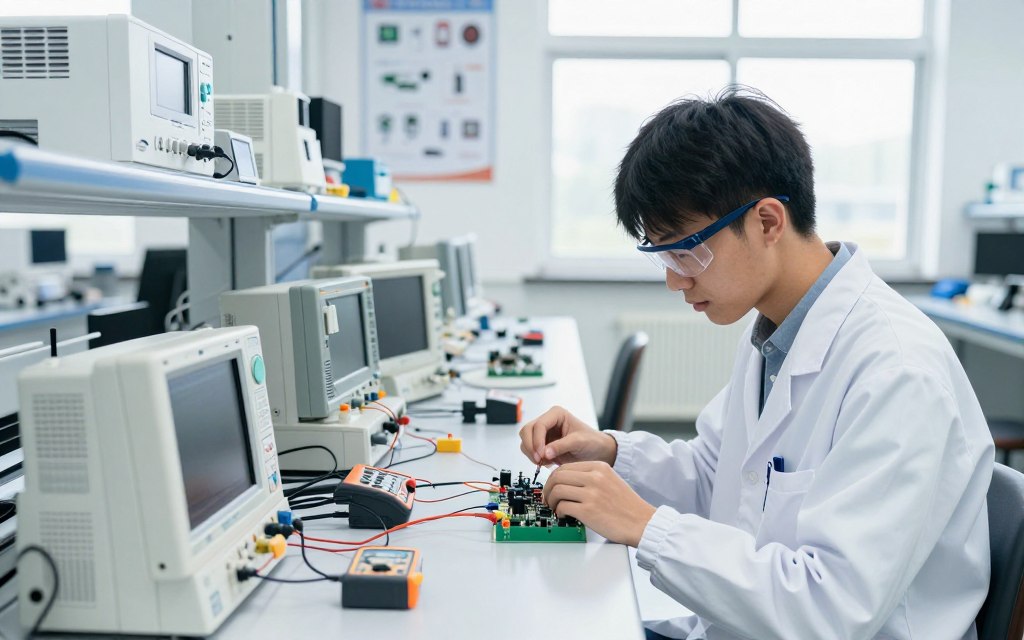
A technical diploma can also prepare you for equipment service. Programs may cover electricity, electronics, patient safety, medical terminology, and clinical equipment.
When comparing Biomedical Technician school options, look for hands-on lab work with real equipment or training units. The work can feel hard if electricity and troubleshooting are new, but difficulty depends on your preparation and comfort with technical subjects.
Some employers may consider candidates without a degree or formal training. Still, an associate degree is a common way to build relevant skills and show a foundation in engineering technology.
Biomedical Technician certification is another way to show readiness. One option is the Certified Biomedical Equipment Technician (CBET) credential. Eligibility can include an associate degree or military BMET training, plus two years of work experience.
Applicants must pass a 165-question exam. CBET certification lasts three years, and renewal requires 30 continuing education units during that period. Those steps can help you plan your education and early work experience.
With that preparation in place, you can consider the workplaces and career paths that fit your goals.
What Career Paths and Earnings Can BMETs Expect?
A hospital BMET may service many kinds of equipment, while a manufacturer specialist may focus on a narrower group of devices. That choice shapes the work, and pay and schedules vary by role, employer, and location.
Pay and schedules vary by role, employer, and location.
Where BMETs work and how their roles differ
BMETs may work in hospitals, clinics, ambulatory healthcare services, repair businesses, medical equipment retail or wholesale, and manufacturing. Some work for independent service organizations, while others support one hospital system or a manufacturer.
You might specialize in one type of equipment or service a broad range. Hospital work can bring varied tasks and contact with clinical teams. Manufacturer roles may focus on a smaller set of devices and their service needs.
Experience can lead to supervisory work. Some supervisory roles often expect a bachelor’s degree. Other directions include manufacturer service, independent service organizations, hospital teams, or education.
Salary, schedules, and career development
A reported national average biomedical technician salary is $51,720 per year. Actual earnings vary with geography, experience, and education. Role, specialization, employer, and level of responsibility also affect pay, so the average does not promise a specific salary.
Some BMET jobs include evening or weekend on-call hours. Hiring conditions vary by region, employer, and specialty, so there is no single answer about a national BMET shortage.
To learn how to become a Biomedical Technician, compare established training programs in your area. Look for hands-on experience, ask about apprenticeships, and check whether you meet certification eligibility.
Consider whether you prefer varied hospital work or a narrower specialty, and whether on-call hours fit your schedule. Your location, training, and choice of employer all shape the career you can build.
Conclusion
BMET work suits people who enjoy practical problem-solving in a healthcare setting. The role pairs technical troubleshooting with responsibility for patient safety, while training and workplace choice shape the path.
Your next step can be comparing local associate degree programs and apprenticeship options. Ask each program how much hands-on practice students get, and what equipment they use in training.


 By




 By