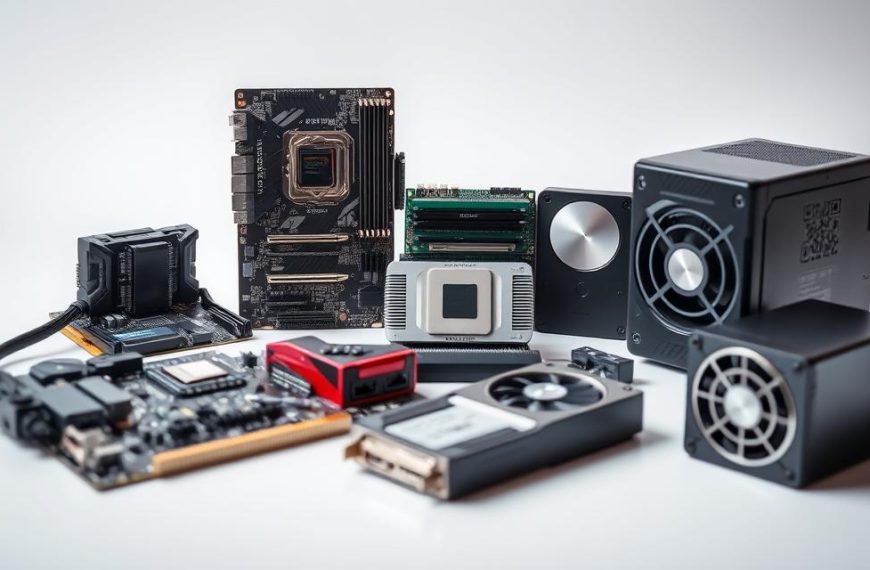

A direct answer: yes, but most devices detect signals or changes rather than photograph a clear view through a wall. If you need to check for a pipe before drilling or assess a room after a collapse, the right tool can matter. Some devices detect movement or objects behind certain walls. They do not give ordinary optical cameras Superman-like vision.
The methods differ in what they detect and how much detail they provide. Some report movement, while others locate metal or show a view inside an accessible wall cavity. Detecting something beyond a wall is not the same as seeing a clear image of it.
UWB radar is radar that sends very short pulses across a wide range of radio frequencies and analyzes their reflections. Knowing what a device measures helps you judge what its results can tell you. The key difference is between detecting information and seeing a realistic image.
Key Takeaways
- Some sensors detect movement or objects beyond certain walls.
- Radar can offer clues, not a normal camera view.
- Wall scanners locate features such as studs, wires, or pipes.
- A borescope needs an opening to view a wall cavity.
- Choose a tool for the exact task and wall type.
Is There Technology That Can See Through Walls? How to See Through Walls in Practice
A sensor reporting movement is different from an optical camera showing a recognizable picture. In practice, the see-through-walls meaning is limited: a device may detect a person, locate an object, or help reconstruct part of a scene. Detection is possible, but a clear visual view is not guaranteed.
A device can detect activity beyond a wall without showing a clear picture of the room.
For example, a sensor might report movement on the other side of a wall without showing who caused it. A different device may help locate a pipe but reveal nothing about the surrounding room. Results depend on the device and the wall.
That distinction matters when you are deciding how to see through walls for a real task. If you need to see walls using a normal camera, an intact opaque surface blocks the view. A sensor can still provide limited information from the side wall or a space behind it.
The phrase “seeing walls” can also mean inspecting the wall itself, rather than viewing beyond it. A scanner may help find hidden building features, while an inspection camera may look inside a cavity. The seven methods differ in what they can detect and how they access the space.
What Are the Seven Ways to Detect or Inspect What Is Behind a Wall?
A numbered list helps separate remote sensing from looking inside a wall cavity or using a source-and-detector setup. These seven methods do not all create an image, and several are meant for building checks rather than people detection.
Only some approaches can detect people beyond an intact wall; others locate materials or inspect an opening. Their results range from a movement cue to a direct view of a small, accessible area.
Remote sensors that infer activity
These methods use signals that reach beyond a barrier and then interpret what comes back or changes. They can provide clues, but they do not work like optical cameras.
- UWB radar sends very short pulses across a wide range of radio frequencies and reads their reflections. Sensitive systems may detect movement or help estimate a target’s location. UWB radar is a sensing method, not an optical camera.
- Microwave or Doppler radar sends radio energy and looks for changes in reflected signals. A frequency shift can indicate motion, so the practical output is often a movement cue rather than a detailed image.
- Wi-Fi signal sensing analyzes changes in wireless signals as they pass through a space. Specialized systems may infer presence or movement. Ordinary Wi-Fi does not itself produce a visual picture of another room.
Can an X-ray camera see through walls?
An X-ray camera cannot work as a simple one-sided room-viewing camera. X-ray radiography needs a radiation source on one side of the object and a detector on the other. The setup records how the rays pass through materials, rather than taking an ordinary camera view.
Radiography involves ionizing radiation, so it is not a casual way to see inside a room. An X-ray camera does not simply point at one side of a wall and show what lies beyond it.
Scanners and probes for hidden building features
The remaining methods inspect heat, materials, or a cavity. Their output depends on the surface, the wall’s contents, and whether the tool can reach inside.
- Thermal imaging detects infrared radiation from surfaces and shows temperature patterns. It can help identify a heat difference on the wall, but it does not show a hidden room through an intact wall.
- Electronic wall scanners use radar, capacitive sensing, or magnetic detection to find features inside a wall. Magnetic detection finds metal, not people; other modes may help locate studs, pipes, or wiring.
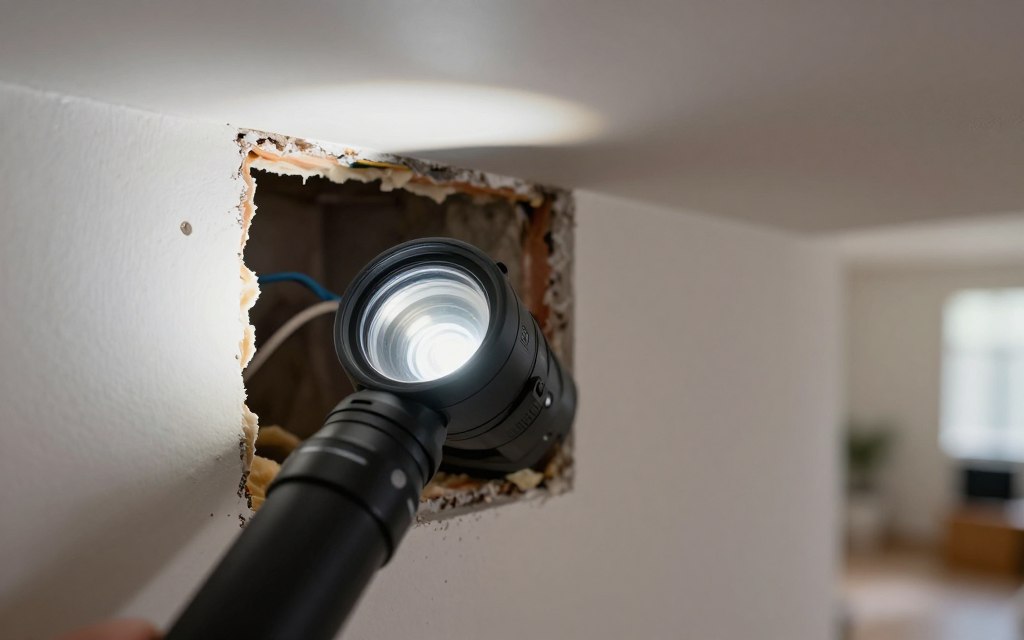
- Borescopes use a small camera on a probe inserted through an opening. The camera gives direct video only in the accessible cavity, and a blockage can stop the view.
Radio-frequency approaches are the most relevant methods for detecting people beyond an intact wall. Their signals need careful interpretation, because a movement reading is not the same as a photograph.
How Do Radio Waves Build an Image?
A radar device can detect movement by sending radio waves toward a target and analyzing their reflections. UWB radar combines a wide bandwidth with relatively low frequencies to balance resolution and penetration. The output is an interpretation of reflected signals, not a normal photograph.
What UWB radar can detect
Radar systems can register movement, and sensitive systems may detect very small motion, such as breathing. UWB radar was introduced in the early 1970s. Engineer Thomas McEwan developed a practical micropower impulse radar at Lawrence Livermore National Laboratory in the 1990s.
More detailed two-dimensional or three-dimensional reconstructions need more antennas and signal processing. A display may use those results to show an estimated position or layout. The detail depends on the system and the signals it receives.
Why reflection data is difficult to interpret
Reflections can mix with echoes from the wall, room, and other objects. A system must sort those signals before it can report a likely target or movement. More signal data does not automatically mean a more certain image.
| Method | Signal approach | Potential output | Main constraint |
|---|---|---|---|
| UWB radar | Short, wide-band pulses | Movement and location cues | Wall distortion |
| Doppler radar | Frequency-shifted reflections | Motion cues | Limited static-scene detail |
| Wi-Fi sensing | Existing wireless signal changes | Motion or presence clues | Not a standalone camera |
Radio-frequency sensing can reveal clues without visible light, but wall materials and objects can weaken or distort the signals. Those effects help explain why readings may vary from one building to another.
Why Do Wall Materials and Room Conditions Matter?
A dry interior partition and a thick, damp, reinforced wall need not produce the same sensor reading. A wall partly reflects radio signals and partly lets them pass, so the received signal changes with the building. A detection is not a guarantee that every person or object will register.
What weakens or distorts the signal
Signal attenuation means that less energy reaches the other side or returns to the receiver. Reflections and diffraction can also alter the path. Cavities, mixed materials, and objects inside a wall may create extra echoes.
Several practical factors can complicate readings:
- Wall thickness can reduce the signal that reaches the far side.
- Moisture can change how the wall affects radio energy.
- Metal reinforcement or mixed construction materials can distort reflections.
- Furniture and other objects beyond the wall can add confusing echoes.
Why a sensor can miss a person or report a false cue
The shape and position of an object affect how much signal reflects back. A person standing still may be missed by a motion-only system. Movement from something other than a person can create a misleading cue.
These limits mean that one reading should not be treated as a full account of a room. A sensor may show a change without identifying its cause. Thermal imaging works differently because it measures heat rather than reflected radio waves.
Can Thermal Imaging Cameras See Through Walls?
Thermal cameras generally cannot see through an intact wall. They detect infrared radiation emitted by objects and surfaces, but wall materials and insulation usually block the signal from a person or object on the other side. A thermal camera does not show the hidden room through a solid wall.
What a thermal camera actually measures
A thermal camera measures infrared radiation and displays differences in surface temperature. It does not detect ordinary visible light, and it does not turn a wall into a transparent surface. The screen shows heat patterns from the surface the camera can observe.
That makes thermal imaging useful for checking heat loss from a building. It can also help reveal temperature differences linked to wiring or piping. A warm patch is a clue, not proof of the exact feature behind it.
When a wall can reveal a heat difference
A warmer or cooler feature behind a wall may change the temperature at the wall’s surface. A thermal camera can show that surface pattern if the difference reaches the outside face. The pattern does not identify the hidden object by itself.
For example, a temperature change may point to a heat leak or a pipe, but other causes can produce a similar mark. You need other information to identify the source. A surface heat pattern is different from an image of a person or room beyond the wall.
For hidden building features, a wall scanner may help locate materials. To view a cavity directly, you need an opening for a probe camera.
What Can Wall Scanners and Borescopes Reveal?
A camera pointed at an intact wall cannot capture an image through that opaque surface. A camera probe inserted through an access hole can show part of the cavity. Ordinary optical cameras need a clear path to the visible scene.
What camera can see through walls?
No conventional optical camera can see through a solid wall. A device marketed as a wall-viewing tool may use sensors to detect features, then display an interpretation. That screen can look like imaging, but it is not a conventional photograph of the room.
A magnetic stud finder detects metal fasteners or pipes, not a person. Electronic scanners can help locate studs, wiring, pipes, and other features. Their readings point to likely locations, rather than showing a clear picture of the space.
What a wall scanner or borescope can show
A wall scanner is useful when you need to find a hidden feature before drilling or cutting. Different sensing modes can detect different materials, so one mode may not find every item in a wall. Read the device’s display as an indication, not a full map.
A borescope provides direct video only after its probe enters an opening or cavity. It may show wiring, insulation, or a nearby pipe if the lens has a clear path. Obstructions and poor lighting can block the view.
The difference is access: a scanner infers what lies inside, while a borescope looks into a reachable space. Wireless signals can also cross a wall, but interpreting those signals takes more than an ordinary router.
How Do Wi-Fi, AI, and 5G Fit In?
A wireless signal reaching another room is not the same as a sensor system extracting information from changes in that signal. Wi-Fi signals can pass through many walls, but a regular router does not create a picture of the next room. Signal penetration alone does not provide an image.
Can Wi-Fi signals reveal movement?
Specialized systems can analyze changes in wireless signals to infer movement or presence. The result depends on the sensors and processing, not on Wi-Fi acting like an optical camera. For background on ordinary network use, see this guide to adding Wi-Fi to a gaming PC.
Research summaries describe how some systems use wireless data for movement or pose estimates. An overview of Wi-Fi-based sensing research also distinguishes basic presence clues from more complex analysis. Those methods still rely on captured sensor data.
What AI can and cannot infer
AI can help classify or reconstruct data from compatible sensors. It cannot make missing or badly distorted information certain. A system’s output remains an estimate when the signal does not clearly show the target.
5G is a radio communication technology, not a wall-viewing camera. A 5G signal may pass through a wall, but that does not mean it shows the room behind it. Specialized detection has a narrower role: it may support a decision when someone needs information about a space.
What Can Military and Rescue Teams Detect?
A responder may check for possible occupants before entering an unsafe structure. Specialized systems are generally radar sensors, not ordinary cameras. They may report presence, movement, or approximate location, but detail depends on the equipment and conditions.
What a military camera that sees through walls can actually do
A military camera that sees through walls is often a radar device that displays sensor-derived information. Some systems may estimate a person’s position or help reconstruct a layout. No system should be assumed to produce a reliable full three-dimensional image in every scene.
Possible uses differ by setting. A rescue team may look for signs of survivors, while law enforcement may assess possible occupancy. A security team may use readings to plan an approach, depending on the equipment and conditions.
What operators need to know before acting
Operators may need answers to questions such as these:
- Is anyone likely to be present?
- How many people may be present?
- Where might they be located?
- Are they moving?
- What position do they appear to be in?
| Situation | Useful sensor information | Decision it can support | Key uncertainty | Why proximity matters |
|---|---|---|---|---|
| Search and rescue | Possible survivor presence or movement | Where to inspect first | Debris can distort readings | Nearer placement may improve signal detail |
| Law enforcement | Possible occupancy and movement | How to assess a room | Objects can create confusing echoes | Closer use can reduce distance effects |
| Military or security assessment | Possible position or activity | How to plan an approach | Scene and wall conditions vary | Nearer placement may aid interpretation |
A sensor reading can inform a decision, but it does not replace verification. The next step is matching a device to the task and the kind of wall involved.
A sensor reading can guide a decision, but it cannot replace verification.
How Do You Choose the Best Device for the Job?
Use a wall scanner to locate a pipe before drilling; consider specialized radar when checking for possible occupancy beyond a barrier. The best device to see through walls depends on what you need to find, the wall construction, and the detail required. Choose for the task, not the device’s marketing name.
Choosing the best device to see through walls
Access matters too. A borescope needs an opening, while a scanner can check a surface. Specialized RF radar may work at a distance, but its readings depend on the system and scene.
| Device | What it can detect or inspect | What it displays | Best-fit task | Main limitation |
|---|---|---|---|---|
| Consumer wall scanner | Studs, wires, pipes, or metal | Likely feature location | Checking before drilling | Does not show a hidden room |
| Borescope | Visible parts of an accessible cavity | Direct video from the probe | Inspecting inside an opening | Needs access; view can be blocked |
| Specialized RF radar | Possible movement or presence | Sensor readings or estimates | Checking activity beyond a barrier | Wall and scene can distort signals |
Can a free app see through walls?
A free app to see through walls cannot provide sensing on its own. Some apps display information from compatible hardware, but the phone app alone does not turn a wall transparent. A screen can show data only when a sensor collects it.
Ask these four questions before choosing:
- What do you need to locate: studs, pipes, wires, movement, or occupancy?
- What is the wall made of?
- Do you need detection, or do you need an image?
- Can you access the wall or use equipment near it?
Matching the tool to the task helps set realistic expectations. If the device may detect people or activity, consent and privacy matter as much as the technical result.
What Are the Privacy and Safety Boundaries?
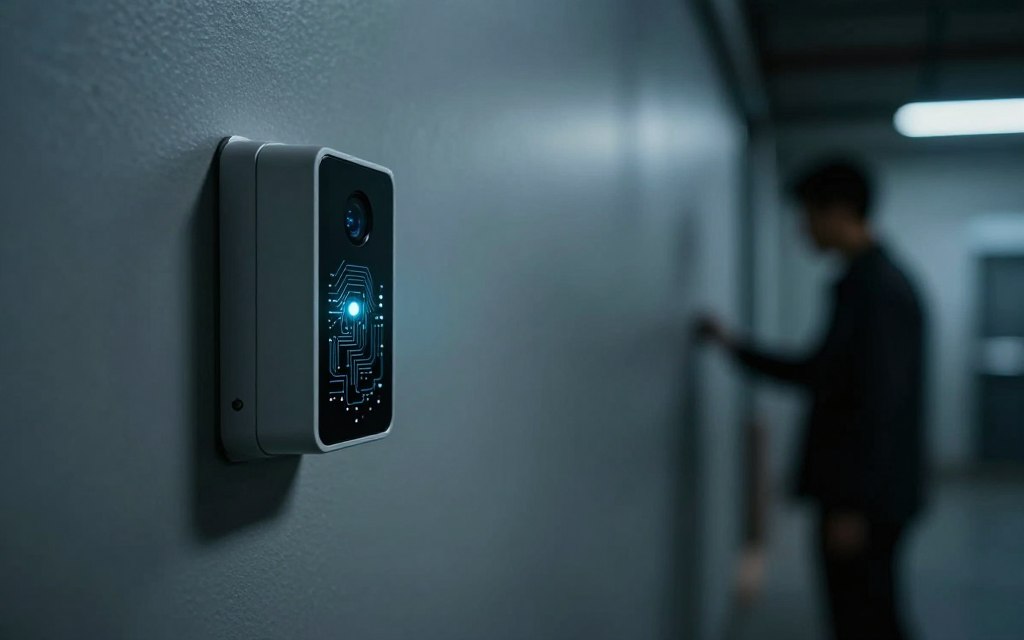
Technical capability does not by itself make monitoring someone’s private space appropriate. Sensing occupants or activity can raise serious privacy concerns. Use these tools only with appropriate permission and check local rules, especially when monitoring people.
Non-invasive RF sensing differs from X-ray radiography. Radiography needs a source and detector on opposite sides of the target, and it involves ionizing radiation. These methods raise different safety concerns.
Responsible use starts with a clear reason to scan and permission from the people affected. The practical limit remains the same: detecting limited information behind a wall is not seeing a clear picture of the space.
Conclusion
Some technology can detect what is behind a wall, but “see through” rarely means a clear camera-like view. RF radar can detect movement or help locate people behind some walls. Thermal cameras and ordinary optical cameras do not provide a clear view through an intact wall.
Your next step is to name the feature or activity you need to detect. Then choose a tool designed for that task and wall type. A scanner for a pipe, a borescope for an accessible cavity, and radar for possible movement all answer different questions.
Choose the tool that provides the specific information you need, and use it responsibly.


 By


 By